
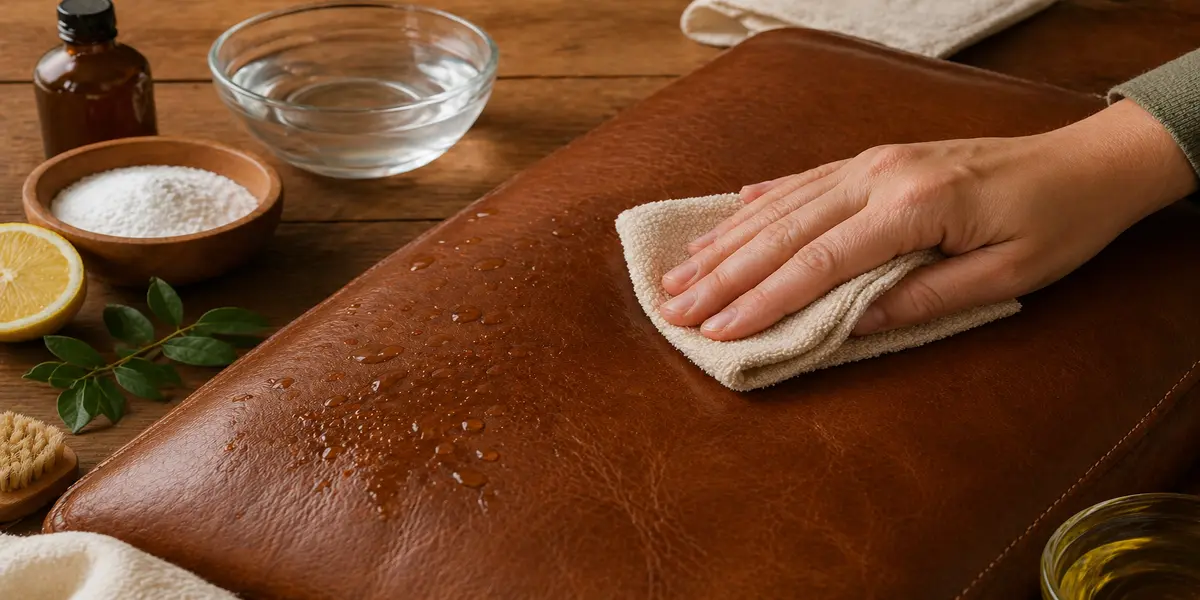
Most folks think leather makes everything look better. Yet even tiny drops of water manage to mess up the smooth finish fast. Sometimes rain does it. Other times, just wet fingers after washing your hands leave traces you did not expect. A lot of individuals skip wiping down leather, worried they might harm the material. Here is what helps: gentle solutions from nature fix things without risk. Baking soda tackles dirt just fine without strong chemicals.
1. Why Water Spots Appear on Leather?
Moisture soaks into leather fast since it’s made by nature. Drying happens at different speeds, sometimes leaving blotches or foggy areas. Tap water carries minerals that often stick after evaporation. Darker leathers show these traces much more clearly than lighter ones. Oils from skin plus everyday dust deepen how bad they seem. Over time, ignoring spills on leather eats away at its strength. A fast wipe often stops harm from sticking around.
2. How to Clean Water Spots Off Leather?
Most folks look up ways to tackle water marks on leather and get rid of oily messes using natural cleaning methods. something that often comes in handy during vacate cleaning when leather furniture needs to look fresh before moving out. A little soap in water helps lift grime while keeping the surface from cracking. Others find success using a barely moist cloth for cleaning. Leather keeps its smooth feel when treated this way. Shine returns quietly after gentle care, not harsh scrubbing. Fading or cracking becomes less likely when nature-based components are used. Over time, careful washing tends to work more effectively.
3. Remove Dust Before Cleaning
Start by removing any loose dust before tackling water marks. A dry microfiber cloth works well for gentle surface care. To avoid damage, brush softly when dealing with fragile leather textures. Focus shifts naturally toward seams and tucked edges during cleanup. Start rough, push grime further in, and color fades faster. Usually, clean the surface before anything else. That step alone shifts results completely.
4. Use Distilled Water rather than Tap Water
Water from the tap can spot leather over time. Since it has less mineral content, distilled water works better. A soft cloth gets just slightly wet with that purified liquid. Never flood the material when working across its surface. Movement in small circles helps lift marks without harm. Start by gently rubbing around the mark to soften its outline. Usually, this clears new watermarks without trouble.
5. How to clean leather with Vinegar and Water?
Vinegar cleans naturally. When mixed with water and vinegar, A soft cloth was just enough to absorb the mixture. A soft piece of fabric soaks up the mix just enough. This wipes across dark marks on leather slowly and calmly. Heavy force could ruin how the material looks over time. Later on, let the leather air-dry by itself. Dull surfaces might look better after using this approach.
6. Restore Shine with Olive Oil
Sometimes, leather looks parched once the stain cleaner dries. Try dabbing on just a bit of olive oil to bring back its give. Take a smooth fabric, add drops slowly. Move the material in loops across the surface. Too much liquid risks soaking deeper than needed. A bit too much oil can pull in grime over time. Shine it up using a dry piece of cloth.
7. Use Baking Soda for Greasy Areas
Grease has a habit of lingering on some leather items, often with watermarks. Baking soda acts quietly overnight , absorbing the oil without chemicals. A sprinkling of dust is delivered just where required, with a little care. Time does some of the work for you as you wait. At first light, a gentle brushing gets rid of what landed. If the stain still appears, repeat. It’s fine on seats and handbags.
8. Lemon Juice for Mild Cleaning
Start by combining lemon juice with distilled water. It works more safely that way. A gentle wipe comes next, using only a soft fabric. Leather likes milder touches, so skip anything harsh. Pure citrus? Too sharp, never pour straight on. Over time, acid eats away at fibers you cannot see. Freshness shows up best when done carefully. If grease and lingering smells are creating similar cleaning headaches elsewhere at home, steps to remove grease and odours from kitchen cabinets shares useful solutions worth exploring. Right away, grab a towel once washing begins. A touch lighter might appear on pale pieces when using this approach.
9. Water Marks on Leather Shoes Need Extra Care
Most times, rain shows up as watermarks on leather shoes. Shoes start seeming worn fast when these spots form. Uneven drying tends to bring out those marks. Fill the insides with newspaper before wiping them down. Shape stays true that way. Start by wiping the spot slowly with a wet cloth. After that, apply a conditioner made for leather so it looks rich again.
10. Avoid Heat While Drying Leather
Heat closes the leather fast. Keep pieces away from radiators. Drying too quickly leads to splits and a stiff feel. Let air move around them inside, just slowly. Air passing by keeps the dampness away, leaving it smooth. Waiting patiently keeps leather smooth and supple. Air drying works better when left alone.
11. Test Homemade Cleaners First
Not every kind of leather likes the same cleaning. Try your mix in a spot nobody sees. Give it time – sit tight for minutes before going wider. Look closely. Watch for dulling or a strange feel. Skipping this might cost more down the road. Start by trying a small spot before going further. These kinds of cleaners might seem moderate, yet they can surprise you. This can cause trouble in direct proceedings without checking. Confidence grows when you see how things react up close.
12. Condition Leather Regularly
Most times, leather stays smooth when treated right. Cracks show up more easily if it dries out. Once the marks from water vanish, that is the moment to act. A little goes far, and less works better here. Move fingers slowly, spreading thin without pressure. With time, conditioned leather takes on a deeper glow. Because it is cleaned often, the material stays strong through seasons.
13. Prevent Future Water Spots
Tiny routines today block ugly marks later on leather. Try sprays built only for leather gear when rain threatens. When damp floors loom nearby, shift your bag or jacket aside instead. At the first drip, grab a cloth speed stops shadows spreading. Cool spots without moisture welcome stored pieces best. Over time, wiping away dust stops dirt gunk from settling in. Taking care of leather is easier.
14. The cleaning mistakes you should avoid
Water also erodes the leather as the fibers are gradually loosened many times by the water. A damp old cloth works better than soaking it through. Chemicals like bleach pull out natural moisture. Gentle washing wins every round compared to rough brushing. Push too firmly, and oil stays behind on the fabric. something many people notice while preparing leather furniture for end of lease cleaning. Later on, excess oil leaves a tacky film behind. A light touch when cleaning keeps leather safe.
15. Natural Methods Work on Different Leather Items
Cleaning works on shoes, bags, even couches or jackets. Depending on how thick the leather is, change what you do. Lighter strokes might be needed if the material feels tender. When leather ages, it soaks up wetness fast and almost too fast. Most of the days, a tiny care makes the surface look new, not fatigued. You can use baking soda and vinegar as well.
Conclusion
Many homeowners prefer to know how to clean water spots off leather because it feels safer. A gentle touch during cleanup prevents harm while bringing back the smooth texture. Knowing what works builds confidence instead of reaching for harsh products. Softness sticks around when routines stay mild and consistent. Over months, small efforts add up when it comes to upkeep. Leather stays sharp when looked after often.