
Remove Grease from Kitchen Cabinets Easily Guide
Ever had a situation when you open your kitchen cabinet and realize that there is a sticky surface and a bad scent remains in it? It is a common problem in most houses, more so in the kitchen areas where they cook daily and therefore the grease accumulates and traps smells. In the course of time the cooking oil particles accumulate on the surfaces of the cabinets and combine with dust and moisture to form an unremovable grime. The good news is that with the proper cleaning method you can easily get your cabinets in to a clean and fresh state without the use of harsh chemicals and spending hours scrubbing the cabinets in bond cleaning.
1. Clean out the Cabinets
The first and the most imperative one is to clear your cabinets. Getting rid of everything will give you maximum access to all corners, shelves, and surfaces and this will make it impossible to miss any deep cleaning. The clean up will provide you with an opportunity to free the area as you sweep away all the stuff. Examine the food stuffs that have expired, the containers which are not in use and even the factors which may be causing bad odors. Moving things out of the cabinet and repacking them helps you to plan on how to put them in a more favorable location in the future as well.
2. Removal of Dust and Loose Dirt
The process of cleaning any organ starts by removing loose dust and debris before any cleaning solution is applied. Wipe all the surfaces using a dry microfiber cloth, duster or soft brush. Be mindful of corners, edges and hinges where dirt is likely to collect without any notice. Failure to do this can lead to a mixture of dust on liquid cleaners and this forms a sticky layer that is more difficult to remove. The cleaning process is facilitated by a quick dry wipe.
3. Apply a Light Degreasing Solution
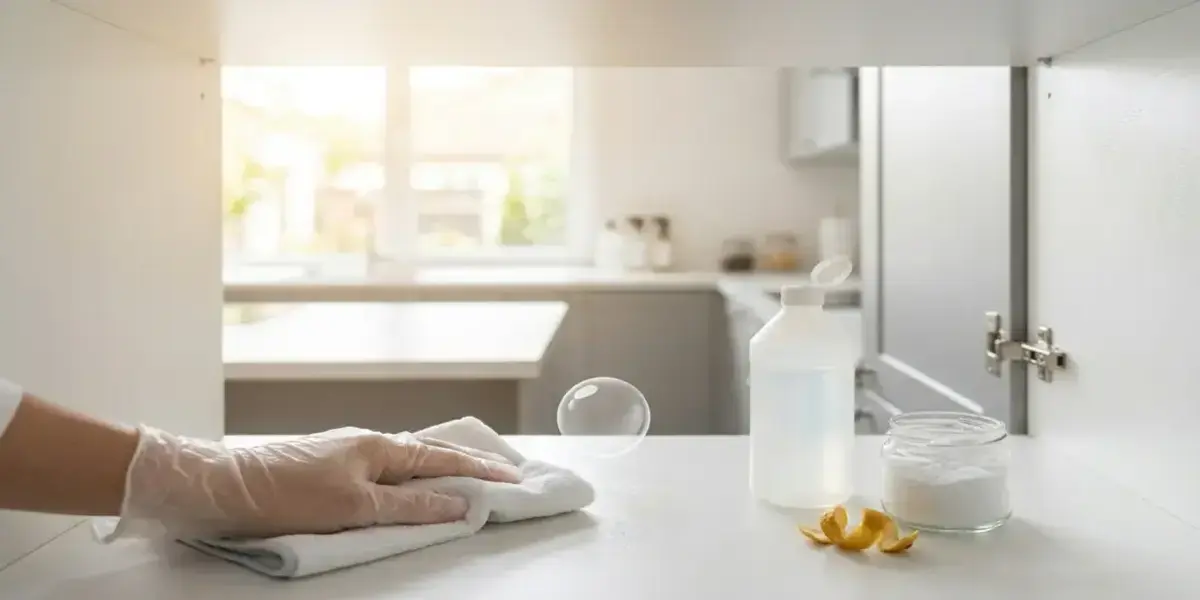
After the loose dirt is taken away, now it is time to get rid of grease. Cleaning agents Easy but effective cleaning agents: Prepare a simple solution containing warm water and a drop of dishwashing liquid. To soften harder grease, a small amount of white vinegar could be added that will dissolve oil and remove the smell. Use a sponge or cloth and wipe it in the solution and squeeze it and scrub cabinets. Particular attention should be given to the spaces around the handles and cooking areas because it is in these areas that the accumulation is often the most substantial. Allow the solution to sit a bit on the obstinate grease and wipe it off.
4. Clean Wipe Cabinet Interiors
Even though the exterior is typically checked, what is inside the cabinets might contain the greases and have a scent that is not evident. Wipe shelves, walls and corners in the cabinets with the cleaning solution. Stains and search areas with stickiness and wash them. This will assist in making sure that there is no residue that is left behind and this will give off smells in future. After cleaning, clean the surfaces again with a clean damp cloth to remove any residue of soap and the inside is clean.
5. Dry to avoid Odours
It is as much as cleaning your cabinets to dry them properly. Wet cabinets may result in moulds and foul odours. Wipe all surfaces using a clean, dry cloth. Then leave the doors of the cabinets open a little to make sure that there is good air circulation. This makes sure that all the parts are fully dry with no possibility of dampness.
6. Deodorise Naturally
It is then time to eliminate all the odours after cleaning and drying. An effective and safe product to use in this step is natural deodorisers. Put a little bowl of baking soda in the cabinet to absorb the undesirable smells. The other good option will be activated charcoal which is good in strong odour control. You can also add coffee grounds or fresh lemon peels to it in case you want it to smell nice. It is preferable that you leave these deodorisers in your cabinets overnight and it will go a long way in ensuring that your place is fresher.
7. Wipe and Rub Cabinet Objects
Always clean and dry things before placing them in the cabinets. In some cases, containers, jars and utensils have grease or odours, which may be deposited again in the cabinet. Clean them with a moist cloth and make them dry. This is an easy trick that can keep the cleanliness that you have struggled to attain, and will stop the odours coming back early.
8. Organise Smartly
After cleaning up, also make time to arrange your cabinets in a wise manner. Do not overcrowd, the space should not be crowded, space must be available to allow free movement of air and to trap moisture and odors. Organize things in such a manner that they can easily be reached and the area is not cluttered. Shelf liners can be used as an added precaution against spills, and the cleaning done in the future will be less difficult. A clean cabinet is also better organised and thus remains longer.
Conclusion
Washing and smelling kitchen cabinets can be regarded as a time-consuming task and it is so rewarding. With the right methods the simple routine can keep cabinets clean and fresh and hygienic with a safe cleaning practices. The rate of expert cleaning up after spills and sometimes deodorising will go a long way in ensuring that your kitchen is a nice place to be based on how well you maintain it. Hygiene of the cabinet is not about appearance alone, but it allows making the cooking experience joyful and healthier on a daily basis.